
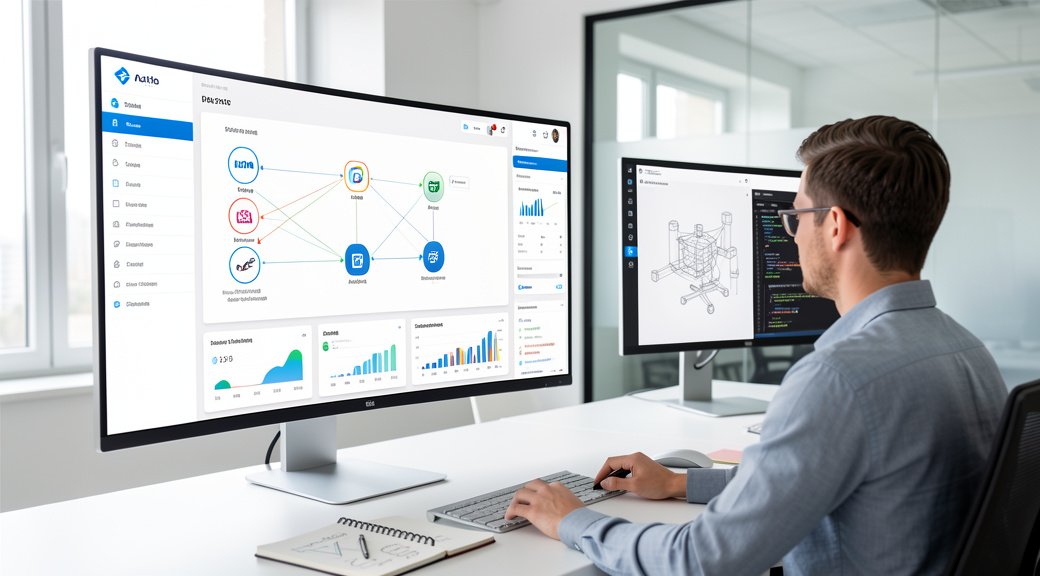
For US small and lower mid-market business leaders, a website is often framed as a digital business card,a necessary cost of entry. Yet, this perspective creates a critical operational blind spot. The real problem isn’t the absence of a website; it’s the staggering opportunity cost of a website that fails to function as a core revenue and growth system. When your digital front door is built on generic templates, lacks integration with core business processes, and cannot adapt to market shifts, it becomes a silent drain on resources and a ceiling on potential. This article will define a strategic framework for professional business website development that moves beyond aesthetics to build a scalable, conversion-focused asset integrated with your operational infrastructure. You will gain a clear understanding of how to approach your website as a system for customer acquisition, process automation, and sustainable growth.
The Root Cause: Treating a Website as a Project, Not a System
The fundamental error in most business website development initiatives is a misclassification. Founders and operators approve a project with a defined budget, timeline, and deliverable: a new site. Once launched, the project is considered complete. This approach ignores the reality that a high-performing business website is not a static artifact but a dynamic, living system. It is a piece of critical business infrastructure, akin to your CRM or ERP, that requires ongoing input, maintenance, and strategic evolution.
The Operational and Financial Impact of a Static Website
The consequences of this “project mindset” are quantifiable and severe. Operationally, a disconnected website creates manual work. Inquiry forms dump into a general email inbox, requiring manual sorting and data entry. Content updates depend on a single overburdened employee or an expensive developer. There is no seamless handoff of lead data to sales teams, and no integration with customer service platforms. This creates drag, increases error rates, and slows response times.
Financially, the impact is measured in lost revenue and inflated customer acquisition costs (CAC). A website that isn’t engineered for conversion leaks potential customers at every stage of the funnel. More critically, it fails to nurture and qualify leads, forcing sales teams to waste time on unqualified prospects. Without the infrastructure to capture and leverage first-party data, businesses remain overly reliant on paid advertising, whose costs continue to rise, instead of building a owned asset that generates organic traffic and leads predictably over time.
Common Mistakes in Business Website Development
Several recurring patterns trap businesses in the cycle of ineffective websites:
- Prioritizing Aesthetics Over Architecture: Choosing a platform or design based solely on visual appeal without considering the underlying data structure, scalability, and integration capabilities.
- Neglecting the Content Engine: Launching a beautiful site with no plan for consistently publishing high-value, SEO-optimized content that attracts and educates a target audience.
- Isolating the Website from Business Tech Stack: Building a siloed website that doesn’t connect to your CRM, marketing automation, customer support ticketing, or proprietary software.
- Underestimating Technical Debt: Using cheap, off-the-shelf themes with bloated code and countless plugins that slow site speed, create security vulnerabilities, and make future enhancements costly and complex.
- Ignoring Conversion Infrastructure: Failing to build clear pathways, landing pages, and lead capture mechanisms tailored to specific customer journeys and business outcomes.
A Structured Framework for System-Driven Website Development
To escape the project trap, you must adopt a systems framework. This approach views professional business website development as the construction of a central nervous system for your digital growth.
Phase 1: Strategic Foundation & Conversion Architecture
This begins not with design mockups, but with business logic. Define the primary commercial objectives of the site (e.g., generate qualified leads, facilitate direct e-commerce, demo requests). Map the specific customer journeys that lead to those outcomes. From this map, architect the conversion infrastructure: dedicated landing pages, strategic call-to-action placements, and lead capture forms that are contextually relevant. The technical platform selection (whether a headless CMS, a robust WordPress architecture, or a custom-built solution) is dictated by these needs for speed, flexibility, and future integration.
Phase 2: Core System Integration & Automation
A website becomes a force multiplier when it automatically connects to other business systems. This phase focuses on building integrations that eliminate manual work and create a seamless flow of data. Key integrations include:
- CRM Sync: Automatically pushing new lead data from website forms into contact records, enriching them with source and behavioral data.
- Marketing Automation Handoffs: Triggering personalized email nurture sequences based on specific content downloads or page visits.
- Internal Notification Systems: Automatically routing high-intent inquiries (like “Request a Quote”) to the appropriate salesperson via Slack or Teams, with full context.
- API Connections to Proprietary Software: For service businesses, allowing clients to log in and interact with their data or project dashboards directly through the website.
This transforms the website from a brochure into an intelligent front-end for your entire operation.
Phase 3: Organic Growth Infrastructure (The Organic Stack)
For sustainable, cost-effective lead generation, your website must be built as an organic growth engine. This is where the Organic Stack concept applies. It’s not a magic bullet, but a systematic approach to creating the infrastructure for consistent content execution and SEO performance. This involves:
- Technical SEO Foundation: Building the site with clean code, a logical site structure, fast loading speeds, and mobile-first responsiveness from the ground up.
- Content Management System (CMS) Strategy: Implementing a CMS that empowers your team to publish and optimize content easily, without developer dependency for every update.
- Topic Cluster Architecture: Structuring content not as isolated blog posts, but as interconnected topic clusters that signal authority to search engines and guide users deeper into your expertise.
- Process for Consistent Execution: Embedding workflows and, where appropriate, leveraging AI-assisted tools for research and drafting to maintain a regular publishing cadence without overwhelming internal teams.
This infrastructure ensures your website appreciates in value, attracting relevant traffic that you own, rather than rent.
Phase 4: Analytics, Iteration & Scalability
The system is not complete without instrumentation. Implementing robust analytics (like Google Analytics 4 with custom events) is crucial to track micro-conversions (newsletter sign-ups, content downloads) and macro-conversions (sales inquiries, closed deals). This data informs continuous A/B testing of headlines, forms, and page layouts. Furthermore, the initial technical architecture must be designed for scalability,able to handle increased traffic, new service lines, or international expansion without requiring a full rebuild. For many growing businesses, this is where the limitations of templated solutions become apparent, and the strategic value of custom software and database scalability becomes clear for their core digital assets.
Implementation Considerations for Business Leaders
Moving to this systems-based approach requires a shift in mindset and resource allocation.
- Budgeting for Infrastructure, Not Just Launch: Allocate resources for the ongoing development, content creation, and system integration that follow the initial launch.
- Internal Ownership: Designate an internal “system owner” who understands the business objectives and can manage the relationship with development partners and coordinate content inputs.
- Partner Selection: Choose a development partner who speaks the language of business outcomes and system integration, not just design trends and coding languages. They should be able to articulate how their work will connect to your P&L.
The Strategic Role of Integrated Systems
Ultimately, a professionally developed business website is the most visible component of a larger growth system. It is the interface where marketing, sales, and customer service converge. When built with a systems mindset, it automates lead qualification, nurtures prospects, provides self-service customer support, and delivers invaluable behavioral data. It becomes a platform for experimentation and adaptation, allowing your business to respond quickly to new opportunities. This is the difference between a cost center and a revenue-generating, scalable asset.
Frequently Asked Questions
What’s the realistic timeline for developing a website using this strategic framework?
A system-focused website development project typically takes 12-20 weeks from discovery to launch, depending on complexity and integration scope. The critical path is the upfront strategic and architectural work, not the visual design. Rushing this phase guarantees a substandard system.
How do we measure the ROI of investing in a system-driven website versus a simpler template site?
Look beyond initial cost. Track metrics like cost per qualified lead, sales team productivity (time saved on manual data entry), organic traffic growth year-over-year, and the percentage of revenue influenced by the website. The ROI manifests in lower customer acquisition costs and higher sales efficiency over a 3-5 year period.
Our business relies on a proprietary software platform. How can our website integrate with it?
This is a core consideration. A strategic development partner will use secure API (Application Programming Interface) connections to create a seamless bridge between your public-facing website and your private software. This allows for client portals, real-time data display, and authenticated experiences that add tremendous value.
We have a small team with no dedicated marketers. How can we maintain the “content engine” you describe?
This is a common constraint. The solution lies in process design and focused tools. A strategic partner can help you build a lean, sustainable content production system,often leveraging AI for research and initial drafting,that aligns with your core expertise. The goal is consistent, high-value output, not necessarily daily blogging. The infrastructure (CMS, SEO foundation) must support this scaled effort.
When does it make sense to move from a platform like WordPress to a custom-built website?
Consider custom development when your business model requires unique user interactions, complex real-time data processing, deep integration with proprietary systems, or you face significant performance and scalability limitations with off-the-shelf solutions. It’s an investment in owning a competitive advantage that cannot be replicated with plugins.
Conclusion
The gap between a typical business website and a true growth system represents one of the most significant untapped opportunities for US small and mid-market companies. Closing this gap requires abandoning the one-time project mentality and embracing a framework that treats your website as integral business infrastructure. It demands a focus on conversion architecture, system integration, and organic growth foundations from the very beginning. The outcome is not merely a better-looking site, but a predictable, scalable engine for customer acquisition and operational efficiency. This is the foundation of modern digital resilience,building owned assets that work in concert to drive sustainable growth. For leaders ready to execute on this vision, the work begins with architecting not just pages, but systems.
