

For US small and lower mid-market businesses, an e-commerce website is often the primary revenue engine. Yet, many operators and founders experience a common, costly problem: the site launches, initial sales come in, but growth quickly plateaus or becomes prohibitively expensive. The issue isn’t a lack of effort or product-market fit, but a fundamental misalignment between the website’s infrastructure and the business’s growth objectives. You’re left with a digital storefront that functions as a cost center,requiring constant tactical fixes for SEO, conversions, and performance,rather than operating as a scalable, automated asset that builds equity. This strategic gap turns potential into friction, leaving revenue on the table and burdening your team with manual work.
This article will provide a structured framework for e-commerce website development rooted in business outcomes, not just technical features. You will gain a clear understanding of how to architect your online store from the ground up to support organic growth, automate key processes, maximize conversion rates, and scale technically without costly re-platforming. We’ll move beyond the checklist mentality to examine how integrated systems turn your website into durable competitive infrastructure.
The Root Cause: Treating Development as a Project, Not an Infrastructure Investment
The plateau most businesses hit stems from viewing website development as a one-time project with a defined end date. This project mindset leads to decisions optimized for short-term launch speed and lowest upfront cost, rather than long-term operational efficiency and scalability. The technical and strategic foundations are poured without considering how the business will need to scale its marketing, customer service, and inventory management.
The Operational and Financial Impact of a Short-Term Approach
The consequences of this approach are felt across the business. Operationally, teams become bogged down in manual tasks: updating content for SEO becomes a chore, order processing requires redundant data entry, and customer service lacks integrated access to purchase history. Financially, this manifests as rising customer acquisition costs (CAC) as you become over-reliant on paid ads due to weak organic traffic. Every new feature request becomes a custom development nightmare, and platform limitations force you into workarounds that increase technical debt. Your website, instead of being an asset that appreciates, becomes a liability that demands constant investment just to maintain.
Common Strategic Mistakes in E-commerce Builds
Businesses often compound the project mindset with several key mistakes:
- Choosing a Platform Solely on Initial Cost: Selecting an overly simplistic or rigid platform that cannot accommodate future business logic, custom workflows, or database complexity.
- Neglecting SEO Infrastructure from Day One: Treating SEO as a post-launch marketing activity rather than baking it into the site’s architecture, URL structure, page speed, and content management system.
- Over-Prioritizing Aesthetics Over Conversion Pathways: Allowing design trends to dictate the user interface, resulting in a beautiful site that obscures calls-to-action and confuses the purchase journey.
- Isolating the Website from Core Business Systems: Building the store as a silo, disconnected from ERP, CRM, inventory management, or 3PL software, guaranteeing future manual processes and data discrepancies.
A Structured Framework for Conversion-Focused E-commerce Infrastructure
The solution is to approach development as building business infrastructure. This framework is built on four interconnected pillars that must be considered in unison.
1. Organic Growth & SEO Systems: The Foundational Traffic Layer
Profitable growth requires a predictable, scalable source of inbound traffic. Your e-commerce site must be engineered to earn organic search traffic consistently. This goes beyond keyword plugins. It requires a systematic approach,an Organic Stack,where technical SEO, content creation, and site structure are part of the core infrastructure. This means implementing a clean, logical URL hierarchy from the start, ensuring blistering page load speeds through optimized hosting and image handling, and using a CMS that allows for easy creation of optimized category and product pages. The goal is to build a site that search engines can efficiently crawl and that provides clear value to users searching for your products. This systematic approach is what transforms sporadic content efforts into a reliable traffic engine, as detailed in our exploration of website development as a revenue engine.
2. Conversion-Focused Website Infrastructure: Architecting for Action
Every element of your site’s design and user experience must be engineered to guide visitors toward a purchase. This is conversion-focused website infrastructure. It involves structuring information with clear hierarchy, designing intuitive navigation that reduces friction, and placing strategic calls-to-action backed by persuasive copy. Key technical components include a high-performance hosting environment to prevent cart abandonment during peak traffic, a streamlined one-page checkout with multiple payment gateways, and robust product filtering and search. The infrastructure must also include tools for A/B testing and analytics, allowing you to move from guesswork to data-driven optimization of every page.
3. Business Process Automation & AI: Eliminating Operational Friction
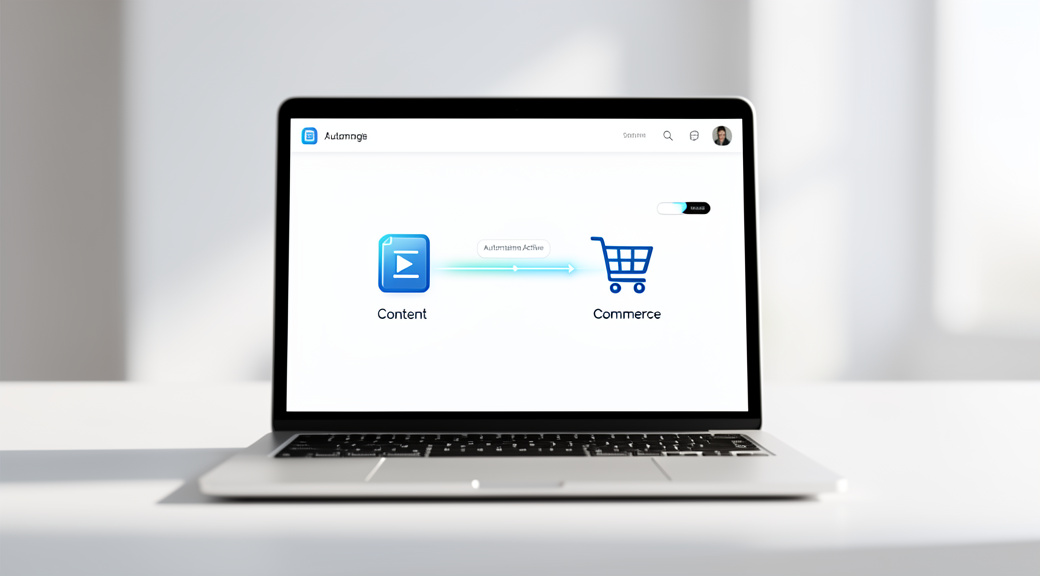
Your e-commerce platform should automate the business processes that drain team productivity. Upon purchase, workflows should automatically trigger: invoices generated, inventory levels updated, shipping labels created, and customer notifications sent. AI can be integrated to handle repetitive customer service inquiries, recommend personalized products, or manage dynamic pricing. This pillar is about ensuring your website is the central nervous system of your operations, not a disconnected limb. Automation turns orders into seamless backend processes, freeing your team to focus on growth and customer relationship building.
4. Custom Software & Database Scalability: Preparing for Complex Growth
As you grow, off-the-shelf platforms often hit limits. You may need custom subscription logic, unique bundling rules, or complex B2B quoting features. Building with custom software and database scalability in mind means selecting a technology stack (like a headless commerce setup or a flexible framework like WooCommerce) that allows for clean, maintainable customizations. Your product and customer data must be structured in a scalable database from the outset, ensuring that as your catalog and customer base grow by orders of magnitude, site performance does not degrade. This foresight prevents the need for a traumatic and expensive full re-platforming down the line.
Implementation Considerations for Founders and Operators
Moving from framework to execution requires a shift in partnership and planning. Avoid the temptation to delegate the entire project to a generic web agency. Seek a partner who understands business operations, not just code. Your roadmap should prioritize features based on ROI and foundational impact,investing first in the core infrastructure that enables automation and SEO. Plan for continuous iteration post-launch; your site is a living system that should evolve based on data and changing market conditions. This is where a long-term execution partnership, rather than a transactional vendor relationship, becomes critical to realizing the full value of your digital asset.
The Strategic Role of Integrated Systems
Ultimately, the power of this framework is not in any single pillar, but in their integration. Your SEO system feeds qualified traffic into your conversion-optimized pages. The data from those conversions feeds your customer database, which fuels your email automation and personalization efforts. Automated processes ensure that increased order volume doesn’t lead to operational collapse. And a scalable custom database ensures the entire system remains performant. This integrated approach transforms your e-commerce site from a tactical sales channel into a strategic business asset,a true piece of automated digital equity that works for you 24/7.
Frequently Asked Questions
When should a business consider custom e-commerce development over an out-of-the-box platform like Shopify?
Consider custom development or heavy customization when your business model involves complex product configurations, unique subscription or membership rules, deep integration with specialized backend systems (like manufacturing or proprietary inventory), or when you have outgrown the transactional and data limitations of standardized platforms. The tipping point is often when the cost of workarounds and lost opportunity exceeds the investment in a tailored solution.
How do we balance SEO needs with a clean, conversion-focused design?
This is a false dichotomy. Proper conversion-focused infrastructure incorporates SEO fundamentals at the architectural level. Fast loading speeds, clean code, mobile responsiveness, and structured data are both SEO and conversion best practices. The key is to ensure content created for SEO (like blog posts or buying guides) is designed to guide users naturally toward product pages with clear, unobtrusive calls-to-action.
What is the most critical technical factor for e-commerce conversion rates?
Page load speed is paramount, especially on mobile. A delay of even a few seconds in page load time directly increases cart abandonment. This is a foundational infrastructure issue encompassing hosting quality, image optimization, code efficiency, and content delivery networks (CDNs).
Can automation and AI truly replace human roles in e-commerce operations?
No, and that’s not the goal. The purpose of automation and AI is to eliminate repetitive, low-value tasks (data entry, answering common FAQs, tagging support tickets) so your human team can focus on high-value activities like strategic merchandising, complex customer service issues, brand storytelling, and partnership development. It augments and elevates human roles.
How should we measure the ROI of investing in this level of website infrastructure?
Look beyond initial development cost. Track metrics that reflect systemic efficiency and growth: organic traffic share vs. paid traffic, customer acquisition cost (CAC) over time, average order value (AOV), conversion rate, shopping cart abandonment rate, and time spent by staff on manual order processing tasks. The ROI is realized in higher margins, more efficient operations, and sustainable, less marketing-dependent growth.
Conclusion
Sustainable e-commerce growth is not achieved through a series of tactical wins or the latest marketing hack. It is the direct result of deliberate, strategic infrastructure. By architecting your website from the ground up as an integrated system,one that inherently supports organic discovery, converts visitors efficiently, automates operations, and scales with your ambitions,you build more than a store. You build a durable competitive moat and a business asset that compounds in value. This requires a shift from a project-based to a partnership-based mindset, focusing on long-term execution over short-term launches. For operators and founders, the question is no longer just how to build an e-commerce site, but how to build the business infrastructure that will power its next stage of growth.




4 responses to “E-commerce Website Development: A Strategic Framework for Sustainable Growth”
[…] without integrated systems, education businesses struggle to implement sophisticated e-commerce functionality that could increase average transaction value through bundled offerings, subscription models, or […]
[…] approach is what separates a cost center from a growth engine, a principle that applies equally to e-commerce development and complex backend cloud […]
[…] or core business processes where off-the-shelf tools create more fragmentation than they solve. A strategic approach to technology development ensures the solution scales with your business and integrates seamlessly with your existing […]
[…] must consider integration points with your existing CRM, ERP, and communication tools. A well-designed website or software infrastructure acts as a powerful data collection and initiation point for these automated […]