
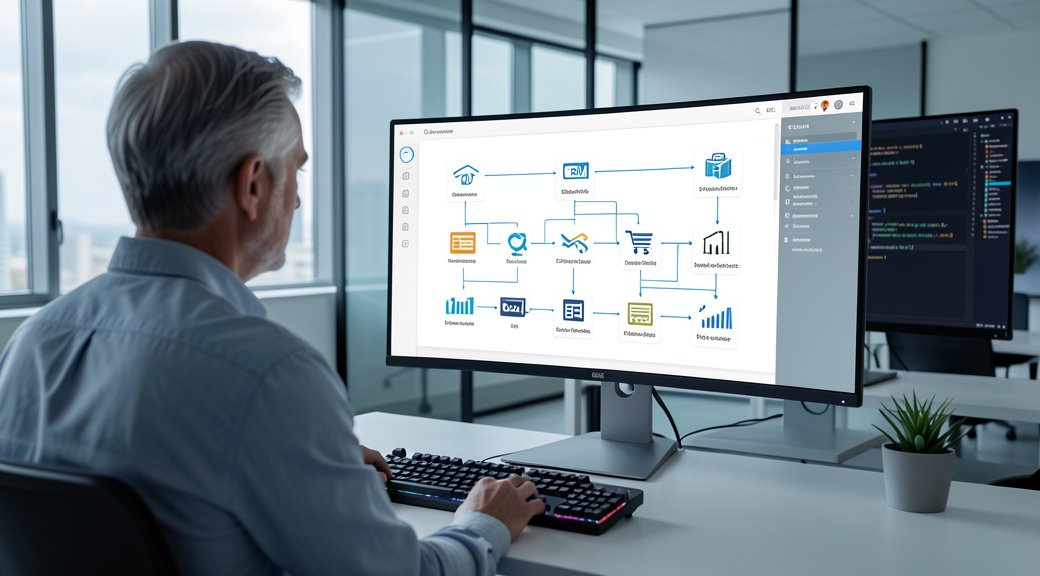
For US small and lower mid-market businesses, growth is often a story of accumulating software. A CRM here, an accounting platform there, an e-commerce system, a marketing automation tool,each chosen to solve a specific, immediate problem. The operational cost of this fragmented technology landscape is rarely measured in upfront subscription fees, but in the daily friction of manual data entry, inconsistent customer information, and the inability to gain a unified view of business performance. This is the silent tax of disconnected systems, where employee hours are spent bridging gaps that software was supposed to close. Strategic API integration services address this core inefficiency, not by adding another application to the stack, but by transforming your existing investments into a cohesive, automated operational engine.
This article provides a structured framework for business operators and founders to evaluate their system connectivity. We will analyze the root causes and true costs of operational silos, outline common strategic mistakes in integration projects, and present a methodical approach to designing API integrations that serve as scalable infrastructure for growth. You will gain a clear understanding of how to move from tactical point-to-point connections to building a resilient data and process architecture that supports automation, informed decision-making, and sustainable scaling.
The Hidden Cost of Disconnected Business Systems
When systems operate in isolation, the business pays a compound interest on inefficiency. The initial purchase of a best-in-class tool for a department seems rational, but the long-term operational debt accrues silently.
Root Cause: Tactical Software Acquisition Without an Architectural Plan
Most businesses do not start with a master technology blueprint. Software decisions are made departmentally, under pressure to solve urgent pain points. Sales needs a better pipeline view, so they select a CRM. Finance needs compliance, so they choose an accounting suite. The evaluation criteria are almost always feature-based and cost-centric, with little to no weight given to how the new system will exchange data with the existing environment. This results in a collection of “islands of automation” where valuable business data,customer records, order status, inventory levels,becomes trapped.
Operational and Financial Impact
The consequences are measurable and severe:
- Labor Inflation: Employees become human APIs, manually re-keying data between systems. This is not a one-time migration but a perpetual, error-prone process that consumes high-value time.
- Data Decay and Decision Lag: Inconsistent data across systems means leadership is making decisions based on outdated or conflicting reports. Is the customer count from the CRM or the billing system correct? The finance team’s revenue number never matches the sales dashboard.
- Poor Customer Experience: A customer updates their email with support, but marketing campaigns continue to bounce. An order ships, but the customer portal shows “processing.” These fractures erode trust.
- Inhibited Automation: True workflow automation,like triggering a fulfillment process from a new sale or enrolling a customer in a nurture sequence based on product usage,is impossible when the systems cannot communicate.
- Scalability Ceiling: As transaction volume grows, the manual overhead required to keep systems synchronized grows linearly or exponentially, creating a hard cap on growth without proportional increases in overhead staff.
Common Mistakes in Business System Integration
Recognizing the problem often leads to a reactive integration project, which itself can falter without a strategic approach.
Mistake 1: The “Quick Fix” Point-to-Point Connection
The most common error is building a one-off, brittle connection between two specific systems (e.g., connecting the website form directly to the CRM). While this solves an immediate need, it creates “spaghetti integration”,a tangled web of point-to-point links that becomes exponentially more complex to maintain, audit, or modify with each new system added. Changing one system often breaks multiple downstream connections.
Mistake 2: Prioritizing Features Over Data Flow
Businesses often focus on integrating flashy features rather than establishing reliable, foundational data flows. The goal should first be to create a “single source of truth” for core entities like customers, products, and orders, before layering on complex cross-functional workflows.
Mistake 3: Neglecting Error Handling and Monitoring
An integration is not a “set it and forget it” project. APIs fail, data formats change, and validation rules are updated. Failing to architect for errors,with logging, alerting, and manual override procedures,means failures can corrupt data or halt processes silently for days before being discovered.
Mistake 4: Underestimating the Strategic Role of Infrastructure
Viewing integration as a simple IT task, rather than as core business infrastructure, leads to under-investment. Just as you wouldn’t build your company on a shaky physical foundation, you cannot build scalable growth on ad-hoc data connections. This mindset is central to building a revenue engine that scales with your business.
A Structured Framework for API Integration Strategy
Moving from reactive fixes to strategic infrastructure requires a disciplined framework. This approach treats integration as a permanent, evolving layer of your business technology stack.
Phase 1: Process and Data Audit
Begin by mapping critical business processes that cross system boundaries (e.g., “Quote-to-Cash,” “Lead-to-Onboarding”). Identify the data entities involved (Customer, Order, Invoice) and document where they are created, updated, and consumed. This audit often reveals redundant data entry points and clarifies which system should be the authoritative source for each piece of data.
Phase 2: Architectural Design: Hub vs. Mesh
Decide on an integration pattern. For most growing businesses, a hub-and-spoke model centered on a dedicated integration platform (iPaaS) or a central custom database is more sustainable than a mesh of direct connections. The hub acts as the orchestration layer, translating and routing data between systems, simplifying maintenance and providing a central point for monitoring and logic. This architectural thinking is akin to the philosophy behind building a foundational website asset,it’s about creating a stable core.
Phase 3: Prioritization Based on Business Value
Not all integrations are equal. Prioritize based on:
1. Volume & Labor Savings: Which manual process consumes the most hours?
2. Revenue Impact: Which data gap most directly affects sales velocity or customer retention?
3. Data Integrity: Which inconsistency causes the greatest risk or cost?
Phase 4: Development with Scalability in Mind
Build integrations using modular, well-documented code. Assume systems will change or be replaced. Use configuration files for API endpoints and credentials instead of hardcoding them. This ensures your integration layer is adaptable, a principle that is equally critical in sustainable e-commerce development.
Phase 5: Implementation: Testing, Deployment, and Monitoring
Rigorously test with real-world data, including edge cases and error simulations. Deploy with a rollback plan. Most importantly, establish ongoing monitoring for data flow health, not just system uptime. Set alerts for failed syncs or data validation errors.
The Strategic Role of Integrated Systems in Growth Pillars
Well-executed API integration is not an IT project; it is the enabler for your core growth systems.
Enabling Business Process Automation & AI
Automation requires triggers and data. An integrated system provides both. A closed-loop system where a customer’s payment (in the billing system) automatically updates their account status (in the CRM and product) is simple automation. More advanced AI automation for business growth,like predictive lead scoring or intelligent inventory replenishment,is entirely dependent on access to clean, unified, real-time data from across the organization. Integration creates the data foundation AI needs to be effective.
Powering Conversion-Focused Website Infrastructure
Your website should be a dynamic interface with your business operations, not a static brochure. This requires deep integration. Real-time inventory checks, personalized content based on purchase history, and instant lead routing to a CRM are all API-driven capabilities. They transform a website from a marketing channel into a core operational system, a concept explored in depth when examining what modern web development services actually deliver.
Supporting Custom Software & Database Scalability
When businesses outgrow off-the-shelf solutions, they often turn to custom software. The value of that custom software is massively amplified if it can seamlessly interact with the rest of the stack. A custom project management tool is far more powerful if it pulls live resource costs from the accounting system. Strategic integration planning ensures that new custom software and AI capabilities are born connected, not isolated.
Fueling Organic Growth & SEO Systems
Even organic growth systems rely on internal data flow. For instance, an effective content strategy uses insights from customer support and product usage data to identify topics that address real pain points. A system like the Organic Stack for consistent execution depends on more than just publishing; it depends on feedback loops from sales and customer data to measure content effectiveness and refine strategy. Integration closes that loop.
Implementation Considerations for Founders and Operators
Moving forward requires pragmatic steps.
- Start with an Integration-First Mindset: When evaluating any new software, “How does it integrate?” should be a top-three question, alongside cost and features.
- Build Internally vs. Partner: Simple, point-to-point connections might be handled internally. A strategic, multi-system architecture often benefits from a partner with deep experience in building strategic technology frameworks, who can avoid the common pitfalls and design for future scale.
- Plan for Evolution: Your integration layer is a living system. Budget and plan for ongoing maintenance, enhancements, and the inevitable need to connect to a new platform.
- Measure Success in Business Metrics: Track reduced manual hours, improved data accuracy rates, faster process cycle times (e.g., order-to-ship), and increased lead conversion rates attributable to faster, more informed follow-up. This focus on measurable outcomes is the same logic applied to building a scalable lead generation system.
Frequently Asked Questions
What is the typical ROI on a strategic API integration project?
ROI is primarily realized through labor arbitrage (reducing manual data work), error reduction (preventing costly mistakes), and revenue acceleration (through faster processes and better customer intelligence). A well-scoped project often pays for itself in 6-18 months through hard cost savings and productivity gains, with the strategic benefit of scalability extending far beyond.
How do we prioritize which systems to integrate first?
Apply the “PIE” framework: Potential, Importance, Ease. Focus on processes with high Potential labor savings or revenue impact, that are Important to core operations, and are relatively Easy to implement (due to available APIs and clear data mapping). This creates quick wins and builds momentum.
Should we use an off-the-shelf iPaaS or build custom integrations?
An Integration Platform as a Service (iPaaS) like Zapier or Make is excellent for democratizing simple automations and connecting common SaaS apps. For complex, mission-critical workflows involving custom software, proprietary systems, or requiring robust governance and logging, custom development is often necessary. A hybrid approach is common.
How do we ensure data security and compliance across integrations?
Security must be designed into the integration layer. This includes using secure authentication (OAuth, API keys), encrypting data in transit, minimizing data exposure (only sending necessary fields), and ensuring your integration architecture complies with relevant regulations (like GDPR or CCPA) by controlling data flow paths. This is a non-negotiable aspect of professional implementation.
What happens if one of our core systems changes its API?
This is inevitable. A well-architected integration strategy mitigates this risk by centralizing connection logic (so one update point fixes all affected workflows) and by implementing monitoring that alerts you to API failures immediately. A maintenance plan should include periodic reviews of vendor API roadmaps.
Can API integrations support real-time data flow, or is batch processing sufficient?
It depends on the process. Financial reporting may only need nightly batch syncs. A customer service dashboard, however, needs real-time access to order status. The architecture should support both patterns, choosing the appropriate method based on business need, system capabilities, and cost. Real-time often requires more robust error handling.
Conclusion
The fragmentation of business systems is a predictable outcome of growth, but it is not an inevitable constraint. By treating API integration not as a series of technical fixes but as the essential connective tissue of your operational infrastructure, you shift from managing software sprawl to orchestrating a coherent technology ecosystem. This is the foundation upon which automation, actionable intelligence, and superior customer experiences are built. The goal is to eliminate the silent tax of manual work and data inconsistency, freeing your team to focus on higher-value activities that drive growth.
This requires a shift from tactical tool acquisition to strategic system design,a mindset that prioritizes connectivity and data flow as core business requirements. For US small and mid-market operators, the competitive advantage will increasingly belong to those who can wield their unified business data as effectively as they manage their finances or their teams. It is a long-term play, building not just a connected system for today, but a flexible, scalable architecture for the opportunities of 2026 and beyond.
