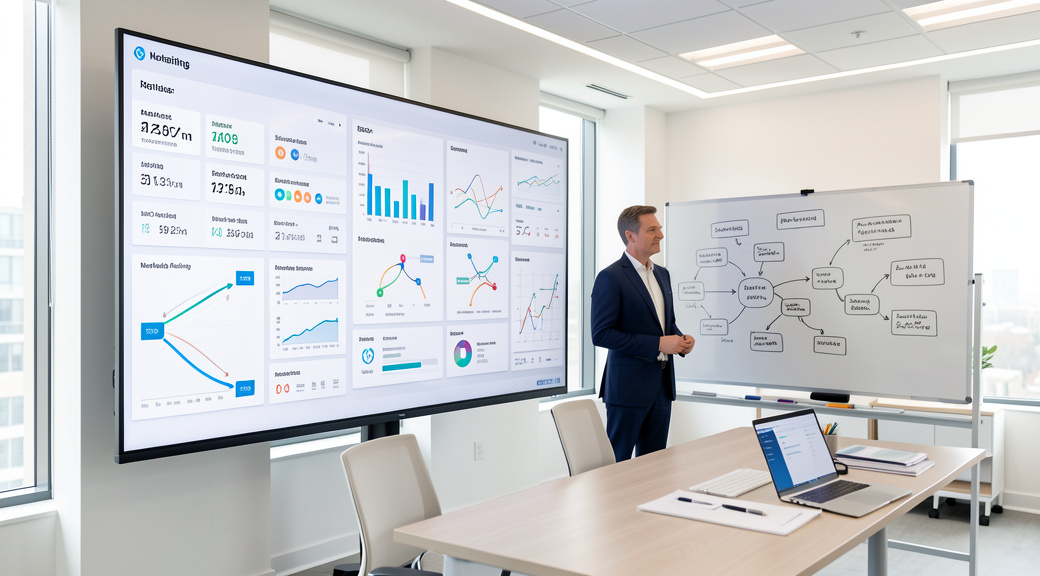

In today’s fragmented digital landscape, businesses face a common challenge: how to transform scattered online tactics into a cohesive, revenue-driving engine. This is where the strategic approach of Shelby Group digital marketing distinguishes itself. Moving beyond the traditional agency model of isolated campaigns, Shelby Group operates as an integrated growth partner, architecting marketing systems that are fundamentally aligned with core business objectives, scalable operations, and measurable financial outcomes. The focus is not on chasing vanity metrics, but on building a resilient, data-informed framework that fuels sustainable expansion.
The Integrated Growth Partner Model
The cornerstone of Shelby Group digital marketing is a departure from the transactional client-agency relationship. Instead of simply executing tasks, the model is built on deep integration, functioning as an extension of a company’s leadership team. This involves a thorough understanding of the business’s sales cycles, operational bottlenecks, target customer psychology, and long-term vision. The goal is to ensure every marketing initiative, from content creation to ad spend, directly supports overarching business goals, whether that’s entering new markets, launching products, or improving customer lifetime value. This strategic alignment is critical, as highlighted in our analysis of why your business needs a data-driven digital marketing partner.
This partnership model demands a shift in perspective. Marketing is not viewed as a cost center but as a core component of the business growth engine. Consultants and strategists work to map the entire customer journey, identifying key touchpoints where strategic intervention can accelerate progress or remove friction. This holistic view ensures that efforts in one channel, like SEO, are reinforced by efforts in another, like email nurturing, creating a synergistic effect that isolated tactics cannot achieve. The outcome is a marketing operation that is more efficient, more accountable, and intrinsically tied to revenue generation.
Building a Scalable, System-Driven Foundation
A primary focus of Shelby Group’s methodology is constructing marketing systems designed for scale. This means moving away from ad-hoc, personality-dependent campaigns and toward automated, process-driven workflows that can grow with the business. The foundation of this system is a robust technology stack and clear operational processes that ensure consistency and allow for continuous optimization. The process begins with a deep audit of existing assets and processes, identifying gaps and opportunities for automation and integration.
The core components of a scalable system include a centralized customer data platform, marketing automation tools, a content management framework, and clear analytics dashboards. These components are integrated to work in concert, ensuring that a lead generated from a paid ad is seamlessly tracked, scored, and nurtured through a personalized email sequence without manual intervention. For a detailed blueprint on this approach, explore our guide on how to build a scalable digital marketing system for US small business growth. This systemization frees internal teams from repetitive tasks, allowing them to focus on strategy and creative execution.
Furthermore, a system-driven approach enables reliable testing and iteration. With clear processes in place, A/B testing on landing pages, email subject lines, or ad copy becomes a standardized procedure, not a special project. Data flows consistently into reporting dashboards, providing a single source of truth for performance. This creates a culture of data-driven decision making, where strategies are adjusted based on empirical evidence rather than gut feeling. The system itself becomes a valuable business asset, one that increases in efficiency and value over time.
The Centrality of Data Intelligence and Attribution
At the heart of effective modern marketing lies the ability to not just collect data, but to transform it into actionable intelligence. Shelby Group digital marketing emphasizes a sophisticated approach to data, moving beyond surface-level metrics like clicks and impressions to multi-touch attribution and customer lifetime value modeling. The objective is to answer the critical question: which marketing activities, across which channels, are actually driving conversions and revenue? This requires implementing advanced tracking, often leveraging first-party data strategies, and employing analytics platforms that can connect disparate data points.
Accurate attribution is the key to optimizing marketing spend. Without it, businesses risk over-investing in channels that claim last-click credit while undervaluing top-of-funnel activities that build essential awareness. A robust data intelligence strategy involves:
- Implementing a unified tracking infrastructure (e.g., via Google Tag Manager and server-side tracking) to ensure data accuracy.
- Developing a custom attribution model that reflects the unique, non-linear customer journey of your industry.
- Creating dashboards that visualize key performance indicators (KPIs) tied directly to business outcomes, such as cost per acquisition (CPA) and return on ad spend (ROAS).
- Regularly auditing data quality to maintain the integrity of decision-making inputs.
This deep analytical work informs everything from budget allocation to creative messaging. It allows marketers to double down on what works and pivot away from what doesn’t with confidence. Understanding the full impact of your efforts is essential, a topic we delve into within our resources on AI-powered marketing attribution. By treating data as a strategic asset, businesses can achieve a significant competitive advantage, making smarter, faster, and more profitable marketing decisions.
Conversion Optimization and Technical Infrastructure
Driving traffic is only half the battle, the other, often more critical half, is converting that traffic into leads and customers. Shelby Group’s approach places immense importance on conversion rate optimization (CRO) and the underlying technical website infrastructure that enables it. A beautiful website that loads slowly or has a confusing checkout process will hemorrhage potential revenue. Therefore, the work begins at the technical level: ensuring site speed, mobile responsiveness, security (HTTPS), and clean, crawlable code are all optimized. This technical SEO and performance foundation is non-negotiable for both user experience and search engine rankings.
On top of this robust infrastructure, a systematic CRO process is implemented. This involves using tools like heatmaps, session recordings, and user surveys to understand how visitors interact with the site. Where do they hesitate? Where do they drop off? These insights guide a hypothesis-driven testing program. Elements like headline copy, call-to-action button design, form length, and page layout are rigorously tested to identify the combinations that yield the highest conversion rates. This focus on the user’s path to purchase is a key element of a conversion-focused website infrastructure. Every element of the digital real estate is scrutinized for its contribution to the ultimate goal.
This work extends beyond the website to encompass all conversion points, including landing pages for specific campaigns, email opt-in forms, and even chat bot interactions. The principle is to reduce friction at every possible step in the journey. By combining a flawless technical foundation with a relentless focus on user psychology and behavior, businesses can significantly amplify the return on their traffic acquisition investments, turning more visitors into paying customers.
AI Integration and Marketing Automation
The modern marketing stack is increasingly powered by artificial intelligence and automation. Shelby Group digital marketing strategically leverages these technologies not to replace human creativity and strategy, but to augment and scale them. AI tools are integrated to handle high-volume, repetitive tasks and to uncover insights that would be difficult for humans to detect in large datasets. This allows the marketing team to focus on high-level strategy, creative development, and relationship building.
Practical applications of AI and automation within this framework are vast. They can include using natural language processing to analyze customer sentiment in reviews and social media, employing predictive analytics to score leads and forecast sales trends, or utilizing AI-powered platforms to dynamically optimize ad bids and placements in real-time across networks. For businesses looking to implement these tools, our services in AI integration services provide a pathway. Chatbots can handle initial customer inquiries 24/7, while email automation platforms can deliver hyper-personalized content sequences based on user behavior.
The key to successful implementation is intentionality. Automation should be applied to defined processes that are already effective. The goal is to increase efficiency, consistency, and personalization at scale. For instance, an automated email nurture sequence can deliver the right content to a subscriber based on the specific whitepaper they downloaded, guiding them gently toward a sales conversation without manual effort. This strategic use of technology creates a more responsive and intelligent marketing operation that can adapt to individual customer needs while operating efficiently.
Sustainable Growth Through Continuous Optimization
The final, and perhaps most defining, characteristic of the Shelby Group approach is the commitment to continuous optimization and adaptation. The digital ecosystem is not static, algorithms change, consumer behaviors evolve, and new competitors emerge. A strategy that works today may be less effective tomorrow. Therefore, the marketing system itself must be built with feedback loops and a culture of experimentation. This goes beyond simple A/B testing to encompass regular strategic reviews of channel performance, competitive analysis, and staying abreast of technological advancements.
This process is cyclical. Data from the intelligence and attribution framework informs hypotheses. These hypotheses are tested through controlled experiments in conversion optimization or campaign structuring. The results are analyzed, and learnings are fed back into the strategy, either scaling successful tests or pivoting away from unsuccessful ones. This creates a virtuous cycle of improvement where the marketing engine becomes more sophisticated and effective over time. Embracing this mindset of agile marketing is essential, as discussed in our resources on B2B growth strategy. It ensures that marketing efforts remain resilient and relevant in a dynamic market.
Sustainable growth is the ultimate outcome of this integrated, systematic, and data-led approach. By aligning marketing with business objectives, building scalable systems, grounding decisions in data, optimizing every touchpoint, leveraging automation, and committing to continuous learning, businesses can build a marketing function that doesn’t just generate sporadic wins, but reliably drives long-term expansion and market leadership. This transforms digital marketing from a tactical expense into a core strategic pillar of the business.