
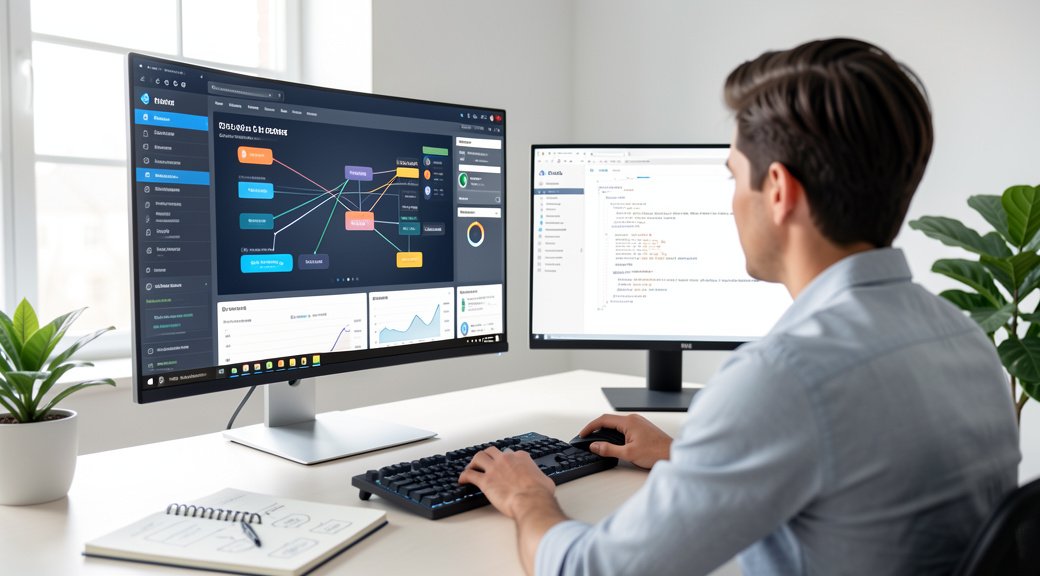
For a US small or lower mid-market business, your website is often the first and most critical point of contact with potential customers. Yet, the vast majority treat it as a static digital brochure,a cost center to be built once and forgotten. The real operational problem isn’t a lack of a website; it’s the failure to leverage that website as a core piece of revenue-generating, scalable business infrastructure. This misalignment creates a silent drain on growth, where significant capital is spent on marketing and sales efforts that are undermined by a weak digital foundation. This article will define why a strategic approach to website development for small business is a non-negotiable component of modern growth, analyze the tangible costs of getting it wrong, and provide a structured framework for building a site that functions as a true business system.
The Root Cause: Treating the Website as a Project, Not a System
The core failure in most small business website initiatives is a fundamental misunderstanding of the asset’s role. Founders and operators, pressed for time and budget, approach it as a one-time project with a clear end date: “launch.” This project mindset leads to decisions based on short-term cost, superficial aesthetics, and a checklist of features rather than long-term business outcomes.
The Project Mindset vs. The Systems Mindset
Under the project mindset, the primary questions are: “How much does it cost?” and “How fast can we get it live?” The systems mindset asks: “How will this asset generate and convert leads for the next 3-5 years?” “How does it integrate with our sales process?” “What data will it collect to inform our strategy?” The former views the website as an expense. The latter views it as the central nervous system of your digital operations,a living, evolving platform that requires ongoing investment and strategy, much like a key employee or a piece of mission-critical machinery.
The Operational and Financial Impact of a Weak Website
The consequences of a brochure-style website are not merely aesthetic; they are quantifiable drains on efficiency and revenue.
Increased Customer Acquisition Cost (CAC)
Every dollar spent on Google Ads, social media marketing, or content creation is less effective if your website fails to convert that traffic. A site with poor user experience, unclear messaging, or a broken conversion path forces you to spend more to generate the same number of qualified leads, directly inflating your CAC.
Operational Inefficiency and Manual Overhead
A website that doesn’t automate basic functions creates manual work. Without integrated contact forms, scheduling tools, or preliminary qualification systems, your team spends time manually processing inquiries, scheduling meetings, and answering repetitive questions. This is a direct tax on your most valuable resource: human capital.
Lost Market Intelligence
A modern website is a rich source of data. A static site provides none. You remain blind to how visitors find you, what content they engage with, where they drop off in the sales funnel, and what questions they have. This lack of intelligence forces you to make strategic marketing and product decisions based on guesswork, not evidence.
Erosion of Trust and Credibility
In today’s market, a slow, outdated, or insecure website signals operational incompetence. Potential clients and partners implicitly question your ability to deliver if your public-facing technology is subpar. It undermines all other brand-building efforts.
Common Mistakes in Small Business Website Development
Understanding these pitfalls is the first step toward avoiding them.
- Prioritizing Aesthetics Over Function: Choosing a template or designer based solely on looks without a plan for user journeys and conversions.
- Building in a Vacuum: Developing the website separately from sales, marketing, and customer service teams, ensuring misalignment from day one.
- Ignoring Technical Foundations: Neglecting core web vitals (speed, mobile responsiveness), security (SSL, updates), and basic on-page SEO structure, which limits visibility and usability.
- No Clear Conversion Strategy: Having no defined paths for visitors to become leads or customers, relying on a single “Contact Us” page as the sole call-to-action.
- Zero Plan for Content & Updates: Launching with no strategy for ongoing content creation, blog posts, or page updates, guaranteeing the site becomes stale and irrelevant to search engines.
A Structured Framework for Conversion-Focused Website Infrastructure
Building a website that acts as a growth system requires intentional architecture from the ground up. This framework moves beyond features to focus on business outcomes.
Phase 1: Strategic Foundation & Architecture
Before a single line of code is written, define the business objectives. What specific actions should visitors take? (e.g., book a consultation, download a guide, request a quote). Map these as user journeys. Simultaneously, architect the technical foundation for speed, security, and scalability. This phase is about building the right blueprint, not just a pretty facade. For a deeper dive into this strategic approach, consider reading our framework on professional business website development.
Phase 2: Core Conversion Engine Development
This is the heart of the system. Build and optimize key pages not as isolated content, but as interconnected parts of a funnel: a high-converting homepage, dedicated service/ product pages with clear value propositions, and, crucially, targeted landing pages for marketing campaigns. Every page must have a primary and secondary call-to-action (CTA) that aligns with the user’s intent and stage in the buying cycle.
Phase 3: Integration & Automation Layer
The website must not be an island. Integrate it seamlessly with your Customer Relationship Management (CRM) system, email marketing platform, and scheduling software. Implement marketing automation to nurture leads,for example, automatically sending a follow-up email series after a whitepaper download. This layer transforms the site from an information source into an active participant in your sales process.
Phase 4: Organic Growth & SEO Systems (The Organic Stack)
Traffic is the lifeblood of the system. This phase involves building a sustainable engine for inbound lead generation. This isn’t about “magic” SEO tricks, but about implementing a consistent, systematic approach,an Organic Stack. This includes a keyword-driven content strategy, technical SEO maintenance, and a publishing cadence that builds topical authority over time. The goal is to reduce long-term reliance on paid advertising by building owned, organic channels directly into your website infrastructure.
Phase 5: Analytics, Iteration & Scaling
Launch is the beginning, not the end. Implement robust analytics (like Google Analytics 4) to track user behavior, conversion rates, and source performance. Establish a regular review cycle to A/B test headlines, CTAs, and page layouts. Use data to inform iterative improvements. As the business scales, the website infrastructure must be able to scale with it,adding new service lines, landing pages, and integration capabilities without requiring a full rebuild.
Implementation Considerations for Business Decision-Makers
Turning this framework into reality requires pragmatic decisions.
Build vs. Partner: The Internal Resource Calculus
While DIY platforms are tempting, honestly assess your team’s bandwidth and expertise. Can they architect databases, ensure enterprise-grade security, and write conversion-optimized copy while running the business? For most SMBs, a strategic partnership with a firm that understands business outcomes (not just code) provides a faster path to a robust system and allows internal teams to focus on core operations.
Budgeting for a System, Not a Project
Allocate budget across three lines: 1) Initial strategic development and build, 2) Ongoing hosting, security, and maintenance, and 3) Continuous investment in content and optimization (the Organic Stack). Viewing the website through an annual operational budget, rather than a one-time capital expense, aligns cost with its continuous role in revenue generation.
The Strategic Role of Supporting Systems
Your website’s power is multiplied when connected to other business systems. For instance, AI-powered chatbots can handle initial qualification 24/7, feeding warm leads directly into your CRM. Custom software can create client portals or unique tools that differentiate your service, all anchored to your website. Business process automation can trigger internal workflows the moment a form is submitted on your site. The website is the front-end of an integrated technology ecosystem.
Positioning Your Website for Long-Term Growth
The ultimate goal is to create a digital asset that appreciates in value. A well-architected website accumulates SEO authority, a library of converting content, and a refined user experience over time. It becomes a predictable source of leads and a scalable platform for launching new offerings. This requires a shift from a tactical, reactive mindset to a strategic, systematic one,viewing technology not as a cost, but as the infrastructure upon which sustainable growth is built.
Frequently Asked Questions
What should a small business realistically budget for a professional website?
For a conversion-focused website built as a business system (not a template), US small businesses should budget for a five-figure initial investment. This covers strategic planning, custom design/development, core page creation, and basic integrations. Crucially, you must also budget for ongoing costs: hosting, security updates, and continuous content/SEO efforts (typically a monthly retainer). This operational budget is what drives long-term ROI.
How long does it take to see ROI from a new website?
Immediate improvements in conversion rates and user experience can be seen post-launch. However, the full ROI from organic traffic growth (SEO) typically manifests over 6-12 months as your site builds authority. The key is to track leading indicators from day one: reduced bounce rates, increased time on site, higher form submission rates, and improved quality of inbound leads.
Can I use a website builder like Wix or Squarespace for a serious business site?
While suitable for very simple brochures, these platforms often create significant limitations in speed, SEO flexibility, customization, and integration capabilities,the very elements required for a scalable growth system. They can become a technical debt that hinders growth, necessitating a costly and disruptive migration later. For a business-focused asset, a custom-built or professionally developed WordPress or similar CMS foundation is recommended.
Who in my company should own the website strategy?
Website strategy must be a collaborative effort led by a C-level executive (CEO, COO, or CMO) with direct input from sales and marketing leads. It is a core business strategy, not an IT task. This ensures the site is built to solve real business problems and support revenue goals.
How does website development connect to business process automation?
Your website is the primary digital touchpoint. It should be the trigger for automated processes. A contact form submission can automatically create a CRM record, assign a sales lead, and send a personalized acknowledgment email. A booked demo can trigger calendar invites and pre-meeting materials. This seamless handoff eliminates data entry, speeds up response times, and ensures no lead falls through the cracks.
Conclusion
For the US small or mid-market business, the decision around website development is a strategic inflection point. Choosing the project mindset yields a cost center that becomes obsolete. Embracing the systems mindset builds a central pillar of your growth infrastructure,a platform that generates leads, automates operations, and provides market intelligence for years to come. The investment is not in code and design alone, but in the structured framework that turns a digital presence into a predictable, scalable engine for revenue. This requires a partnership with executors who think in systems, not just templates, and who are committed to building assets that appreciate alongside your business.

One response to “Website Development for Small Business: Building a Growth System, Not Just a Brochure”
[…] ensure the data inputs are reliable and the systems can communicate. This phase may involve light website development to create data capture forms, database cleanup, or the development of custom API connectors to […]