
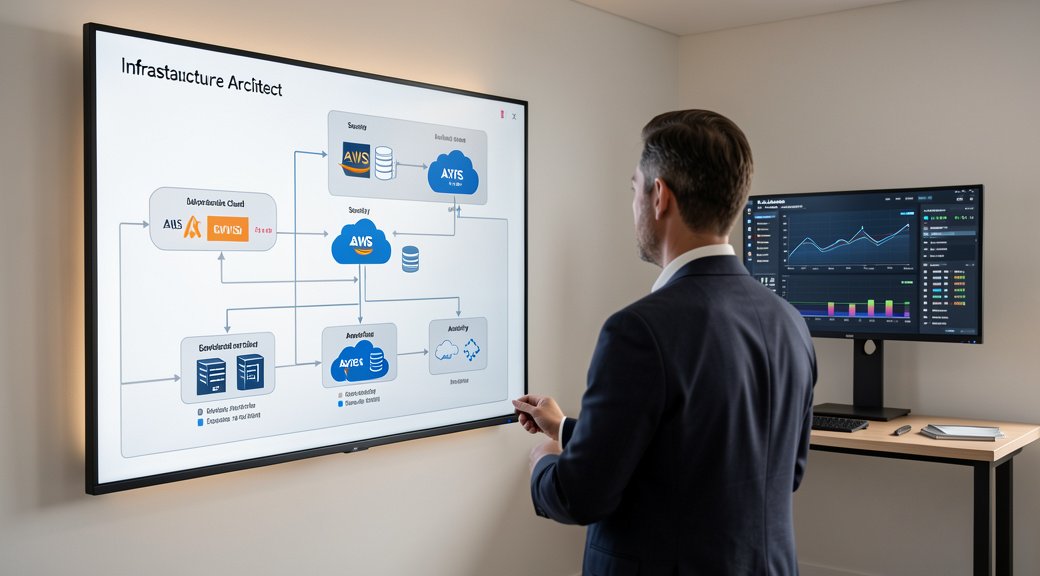
For US small and lower mid-market businesses, the decision to migrate to the cloud is rarely about technology for technology’s sake. It’s a strategic response to operational constraints that directly limit revenue growth and competitive positioning. The core problem isn’t a lack of awareness about cloud benefits, but a fundamental misalignment between migration goals and business outcomes. Too often, cloud migration services are approached as a one-time IT project,a “lift-and-shift” of servers,rather than a foundational restructuring of business infrastructure. This tactical mindset leads to cost overruns, security gaps, and systems that fail to deliver the promised agility. This article provides business operators and founders with a structured framework for treating cloud migration as a strategic business initiative. You will gain a clear understanding of how to align technical migration with operational scalability, cost predictability, and the development of a resilient digital foundation that supports sustainable growth.
The Root Cause: Treating Infrastructure as a Project, Not a System
The primary failure in most cloud migrations stems from a project-oriented mindset. Leadership approves a budget to “move to the cloud,” delegating execution to IT or an external vendor with a focus on dates and go-live milestones. The business case is often built on vague promises of reduced IT overhead or future scalability, without tying specific operational processes or revenue functions to the new environment.
Disconnected from Business Process
When migration is siloed from daily operations, it becomes a disruptive event rather than an enabling one. Legacy applications are moved as-is, replicating their inefficiencies in a more expensive environment. The opportunity to re-engineer workflows, automate manual tasks, or integrate disparate data sources is missed because the scope is narrowly defined as migration, not transformation.
Misunderstanding Total Cost of Ownership (TCO)
The shift from capital expenditure (CapEx) on hardware to operational expenditure (OpEx) on cloud services introduces a new financial model. Without proper architecture and governance, OpEx can spiral unpredictably due to poorly configured resources, unused instances, or data egress fees. The anticipated savings evaporate, replaced by a variable and often higher monthly bill.
The Operational and Financial Impact of a Flawed Migration
A poorly executed cloud migration creates drag on the entire organization, affecting far more than the IT budget.
Operational Fragility: Applications that were stable on-premise may suffer from latency, downtime, or compatibility issues in the cloud, directly impacting employee productivity and customer-facing services. This fragility turns IT from an enabler into a firefighting department.
Security and Compliance Exposure: The shared responsibility model of cloud providers is frequently misunderstood. Businesses assume the provider handles all security, leaving their own data configurations, access controls, and compliance settings vulnerable. For US businesses handling sensitive data, this is not just an IT risk but a legal and reputational one.
Locked-In Potential: A hastily architected migration can create deep dependencies on a single cloud provider’s proprietary services. This vendor lock-in eliminates future negotiating leverage and makes it prohibitively expensive and complex to switch providers or adopt a multi-cloud strategy, limiting strategic optionality.
Stifled Innovation: The promised agility of the cloud remains out of reach if the new environment is just a virtual copy of the old one. Development teams cannot leverage modern, scalable services like serverless computing, managed databases, or AI/ML tools because the underlying architecture wasn’t designed for them. The business pays a premium for cloud hosting but receives none of its innovative capacity.
Common Strategic Mistakes in Cloud Migration Planning
- The “Big Bang” Approach: Attempting to migrate everything at once maximizes risk and disruption. It becomes nearly impossible to isolate and troubleshoot issues, leading to extended downtime and eroded stakeholder confidence.
- Prioritizing the Easiest Workloads First: Migrating low-impact, non-critical applications first may build confidence but delivers minimal business value. It delays the migration of complex, core systems where the real benefits,resiliency, scalability, integration,are realized.
- Neglecting Post-Migration Optimization: The project is considered complete at go-live. No ongoing team is assigned to monitor performance, right-size resources, implement cost governance, or iteratively improve the architecture. This leaves significant value and savings on the table.
- Underestimating the Skills Gap: Assuming existing IT staff can seamlessly manage a fundamentally different environment without training or new hires. This leads to operational blind spots and an inability to leverage advanced cloud-native features.
A Structured Framework for Business-Aligned Cloud Migration
Successful migration requires a phased, outcome-oriented framework that treats cloud as business infrastructure.
Phase 1: Business Case & Discovery (The “Why” and “What”)
This phase defines success in business terms, not technical ones. It begins with a collaborative workshop involving operations, finance, and technology leadership. The goal is to answer: Which specific business processes will improve? Which revenue bottlenecks will be alleviated? How will cost predictability be achieved? A detailed application and dependency inventory is created, mapping each workload to the business function it supports.
Phase 2: Architecture & Design (The “How”)
Here, the strategic website development as a revenue engine principle applies directly: infrastructure must be built to scale. Design is not just about where to host, but how to rebuild for the cloud. This involves:
- Application Assessment: Categorizing each workload as Rehost (lift-and-shift), Refactor (modify for cloud optimization), Revise (partially re-architect), Rebuild (cloud-native rewrite), or Replace (with SaaS).
- Security-First Design: Embedding identity management, encryption, network segmentation, and compliance controls into the blueprint from the start.
- Integration Strategy: Planning how cloud-based systems will connect with remaining on-premise applications, third-party APIs, and core business platforms, ensuring data flows seamlessly to support operations.
Phase 3: Pilot & Proof of Concept
Select one or two non-critical but representative applications for migration. This pilot validates the architecture, tools, and processes. It provides tangible data on performance, cost, and resource requirements, which is used to refine the plan and build internal competency before tackling mission-critical systems. This iterative approach mirrors the methodology behind effective e-commerce website development, where testing and learning precede full-scale launch.
Phase 4: Phased Migration & Decommissioning
Execute migrations in waves, prioritized by business value and dependency. Each wave should be a complete lifecycle: migrate, validate, optimize, and then decommission the old on-premise resources to realize cost savings. Continuous communication with end-users is critical to manage change and gather feedback.
Phase 5: Ongoing Governance & Optimization
This is where the migration transitions from project to permanent operating model. Establish a Cloud Center of Excellence (CCoE) or assign dedicated roles for:
- Cost Management: Implementing tagging policies, budgeting alerts, and regular reviews to right-size resources and eliminate waste.
- Performance Monitoring: Using native cloud tools to track application health, user experience, and resource utilization.
- Security Posture Management: Continuously scanning for configuration drift, vulnerabilities, and compliance adherence.
The Strategic Role of Systems: Automation, Data, and Conversion Infrastructure
A modern cloud environment is more than hosting; it’s the platform upon which critical business systems are built. A strategic migration intentionally creates the foundation for these systems.
Enabling Business Process Automation & AI
The elastic compute and managed AI services of major cloud platforms are the engine for automation. Post-migration, businesses can systematically automate workflows,from document processing and customer onboarding to inventory management and reporting. This transforms the cloud from a cost center into a direct contributor to operational leverage, a concept explored in depth regarding AI automation for business growth. The cloud provides the scalable, on-demand infrastructure required to run these intelligent systems cost-effectively.
Unlocking Custom Software & Database Scalability
For businesses relying on custom-built applications, the cloud removes traditional infrastructure bottlenecks. Databases can scale dynamically with demand, and development teams can use serverless and container services to build and deploy features faster, without managing servers. This aligns with the principles of modern web development services, where the backend infrastructure is designed for limitless horizontal scale, allowing the software itself to become a more powerful competitive asset.
Supporting Conversion-Focused Website Infrastructure
A company’s public-facing website is often one of the first workloads moved to the cloud. Done strategically, this move enhances its role as a growth engine. Cloud-based SEO-optimized website development benefits from global content delivery networks (CDNs) for faster page loads, scalable hosting that handles traffic spikes without crashing, and easier integration with marketing automation and analytics platforms. The reliability and performance of the cloud directly support higher conversion rates and better user experience.
Integrating with Organic Growth Systems
The cloud also supports the technical backbone of organic growth. A stable, fast website is a prerequisite for SEO success. Furthermore, cloud data warehouses can consolidate marketing analytics, CRM data, and cost information, enabling sophisticated analysis of channel performance and customer lifetime value. This data-driven approach informs content strategy and investment, creating a feedback loop that powers sustainable growth. While not every business needs a full Organic Stack, the cloud provides the reliable, integrable infrastructure that makes any systematic growth effort possible.
Implementation Considerations for US Small and Mid-Market Businesses
Partner Selection: Choose a cloud migration services partner who speaks the language of business outcomes, not just technical specs. They should have a documented methodology that includes the governance and optimization phases, not just the migration event. Look for experience in your industry and with businesses of your scale.
Internal Alignment: Designate a business-side project sponsor, not just an IT manager. This person is accountable for realizing the defined business benefits and ensuring cross-departmental cooperation.
Skills Development: Budget for training and certification of key internal staff. Alternatively, plan for a managed services partnership to provide the ongoing expertise needed for optimization and security, allowing your team to focus on application and business logic.
Financial Modeling: Work with your finance lead to create a detailed 3-year TCO model comparing current state to the future cloud state, including all subscription costs, estimated optimization savings, and the cost of internal/external management. This model should be a living document updated monthly. The goal is predictable OpEx, not just lower cost.
Frequently Asked Questions
How long does a strategic cloud migration typically take for a mid-market business?
The timeline is dictated by complexity, not size. A well-planned migration for a business with 10-15 core applications typically follows a 6-9 month roadmap from discovery to full optimization, executed in phased waves. Rushing this process is the primary source of risk and cost overruns.
What is the most overlooked cost in cloud migration?
Ongoing optimization and management. Businesses budget for the migration labor but fail to allocate resources for the continuous work of rightsizing, monitoring, and securing the environment post-migration. This “Day 2” operation is where 30-40% of potential savings are captured.
Should we use multiple cloud providers to avoid lock-in?
For most small and mid-market businesses, the complexity and cost of a true multi-cloud strategy outweigh the benefits. A more pragmatic approach is to architect within a single primary provider using widely-adopted open-source standards and avoiding deep dependence on its most proprietary services. This maintains future portability without the operational overhead of managing multiple clouds.
How do we ensure security during and after the migration?
Security must be designed in, not bolted on. This means implementing identity and access management (IAM) policies, encrypting data in transit and at rest, and configuring network security groups before migration begins. Post-migration, implement automated security scanning and configuration compliance tools, and assign clear ownership for monitoring alerts and incident response.
Can we migrate if we have legacy custom software?
Yes, but it requires careful assessment. The software may need to be refactored or containerized to run efficiently in the cloud. This assessment is a critical part of the discovery phase. The migration of custom software often unlocks significant performance and scalability improvements, turning a legacy liability into a modern asset, a process central to custom website design and development principles applied to backend systems.
What metrics indicate a successful migration?
Beyond technical uptime, track business metrics: reduction in time-to-market for new features, improvement in application performance for end-users (measured), achievement of forecasted cost predictability (not just reduction), and the successful decommissioning of old hardware. The ultimate metric is whether the business can execute its strategic initiatives faster due to the new infrastructure.
Conclusion
Cloud migration, when executed as a strategic business initiative, is not an IT expense but a capital investment in organizational agility. The goal is not to change where your applications run, but to transform how your business operates,enabling scalable automation, data-driven decision-making, and resilient customer-facing systems. This requires moving beyond the project mindset to embrace cloud infrastructure as a permanent, evolving system that requires deliberate design and governance. For US businesses facing competitive pressure and growth ambitions, a structured, phased approach to cloud migration services de-risks the transition and ensures the new environment actively contributes to operational leverage and revenue growth. It builds the foundational platform upon which responsive web architecture, intelligent automation, and custom software can thrive, turning technology from a support function into a core component of your business model.
